No Other Industry Punishes an Anodising Failure Like Aerospace
In automotive, a coating deviation triggers a rework order. In aerospace, it can ground an aircraft or suspend a contract for years. The specifications are tighter, the documentation more exhaustive, and the consequences of failure greater than anywhere else in manufacturing.
Aerospace is also the dominant application for anodised aluminium by volume. The US Department of Energy puts 58% of all anodised aluminium globally going into aerospace. The sector does not just set the highest bar for quality. It defines the bar for the entire industry.
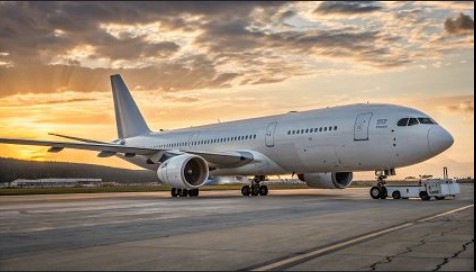
Precision anodised aluminium components for aerospace and defence. Every part carries a full process history traceable to MIL-PRF-8625 or an equivalent aerospace standard.
The Scale of Aerospace Anodising
Aerospace Anodising Types: MIL-PRF-8625 at a Glance
MIL-PRF-8625 (the updated, performance-based successor to MIL-A-8625) defines six anodising types used across aerospace and defence. Each has distinct chemistry, thickness range, and application:
| Type | Process | Typical Thickness | Primary Application |
|---|---|---|---|
| Type I | Chromic acid anodising (CAA) | 2–8 µm | Fatigue-sensitive structural parts, paint adhesion base |
| Type IB | Chromic acid, low voltage variant | 2–8 µm | Thin-walled or complex geometry structural components |
| Type IC | Non-chromic acid alternative (TSA, BSAA, PSAA) | 2–10 µm | REACH-compliant replacement for Type I/IB |
| Type II | Sulphuric acid anodising (SAA) | 1.8–25 µm | General corrosion resistance, decorative, wear resistance |
| Type IIB | Thin sulphuric acid anodising | <10 µm | Tight-tolerance parts where coating thickness is constrained |
| Type III | Hard anodising (sulphuric acid, low temperature) | 25–75 µm | Maximum wear and abrasion resistance, hydraulic components |
What the Industry Data Shows
Market Scale & Demand
- 58% of all anodised aluminium globally is consumed by aerospace, making it the largest end-market ahead of construction, automotive, and consumer electronics.[1]
- $8.5 billion global aerospace aluminium market in 2023, growing at 6.2% CAGR through 2033, driven by Airbus and Boeing backlogs and rising NATO defence budgets.[2]
- 66% of global metal anodising is aluminium, with aerospace driving the highest-specification demand. North America alone holds a 30% global market share.[5]
Nadcap & Quality Standards
- Scope-specific accreditation: Each anodising type requires a separate Nadcap approval. One of the most common misconceptions when entering aerospace supply chains.[4]
- Boeing, Airbus, and GE Aerospace mandate Nadcap accreditation for all special processes. No Nadcap, no shipment, regardless of quality history.[4]
- First Article Inspection (FAI) per AS9102 is required for every new aerospace part, including measured coating thickness, corrosion test results, and a full batch process record.[6]
REACH & Chemical Regulation
- Hexavalent chromium (Cr(VI)) is an EU REACH Substance of Very High Concern. Chromic acid anodising (Type I) now requires a time-limited ECHA authorisation to continue in Europe.[7]
- Tartaric-Sulphuric Acid (TSA) is Airbus's qualified REACH-compliant alternative. It matches CAA's corrosion protection and fatigue life on structural alloys and is now standard across European aerospace supply chains.[8]
- BSAA (Boeing-qualified) and PSAA (Fokker-proposed) are active investment priorities. ASG King and Fowler completed a £2 million TSA line investment in March 2026.[9]
The 5 Quality Demands That Make Aerospace Anodising Different
Demand 1: Coating Precision Across the Entire Part
Aerospace drawings specify thickness at multiple points, not an average. A hard-anodised hydraulic component may require 50–65 µm at every location with ±5 µm tolerance. Conventional lines relying on periodic bath checks routinely produce 8–12 µm variation across a single part, which is a rejection in aerospace.
Demand 2: Corrosion Resistance Beyond Standard Testing
Commercial anodising is tested to 168 hours salt spray. Aerospace requires 336 hours for Type II and 1,000+ hours for sealed Type III. Inadequate sealing is invisible to the eye but causes downstream failure caught by the prime, not the anodiser, leading to contract suspensions lasting 12–18 months.
Demand 3: Managing the Chromic Acid Phase-Out
REACH has classified hexavalent chromium as an SVHC, requiring ECHA authorisation to continue CAA in Europe. Anodisers must now qualify TSA (Airbus) or BSAA (Boeing) as replacements, which requires full requalification of existing part approvals, a significant technical and commercial undertaking.
Demand 4: Full Process Traceability and Statistical Control
Aerospace requires SPC data, FAI documentation, process travellers, and material certifications per batch. A supplier with perfect process quality but inadequate records will fail a Nadcap audit just as readily as one with poor process control. Most first-time audit failures are documentation failures.
Demand 5: Fatigue Life Preservation
Type III hard anodising can reduce fatigue life of high-strength alloys (2024-T3, 7075-T6) by 10–30% at high thickness. Aerospace engineers specify anodising type, maximum thickness, and sealing chemistry precisely to manage this. Any unauthorised process substitution, even if it passes visual and dimensional checks, may compromise a structural component.
Is your anodising operation ready for aerospace qualification? AluMind provides the real-time process control, automated traceability, and SPC-ready data that Nadcap audits and AS9100 require.
Book a Free DemoThe Path to Aerospace Qualification
Step 1: AS9100 Quality Management System
AS9100 is the aerospace QMS standard, built on ISO 9001 with additional requirements for configuration management and airworthiness. It must be in place and third-party certified before Nadcap accreditation can be pursued.
Step 2: Process Documentation
Suppliers need fully documented process specifications before applying for Nadcap: written procedures, operator instructions, bath analysis schedules, and corrective action frameworks. Most businesses underestimate the documentation workload at this stage.
Step 3: Nadcap Audit
The Chemical Processing audit covers bath chemistry, process controls, operator training, equipment calibration, and documentation. A merit-based system determines audit frequency. Initial accreditation typically takes 18–24 months from preparation start to approval.
Step 4: Prime-Specific Approvals
Nadcap is a prerequisite, not a guarantee. Boeing, Airbus, and BAE Systems each maintain their own Approved Supplier Lists with additional requirements, including process trials, sample testing, and a customer-led audit.
Why Aerospace Qualification Is Worth the Investment
The same barriers that make aerospace qualification hard are what make the position commercially valuable. Requalifying a new anodising supplier takes primes 12–18 months, so they rarely switch. Long-term purchase agreements, price stability, and protected market positions are the reward. With Airbus and Boeing backlogs extending to the mid-2030s and NATO defence budgets rising, demand for precision anodised aluminium is secured for decades.
Frequently Asked Questions
MIL-A-8625 was the original process-prescriptive US military spec. MIL-PRF-8625 is its performance-based successor, defining what the coating must achieve rather than exactly how to achieve it. Both names appear on engineering drawings and are treated interchangeably in practice. The specification defines six coating types (I, IB, IC, II, IIB, III) with different chemistry, thickness, and performance requirements.
Nadcap (administered by the Performance Review Institute) accredits chemical processing against bath chemistry records, process travellers, operator training, equipment calibration, corrective action logs, and process controls. Accreditation is scope-specific and takes 18–24 months initially. Ongoing audits occur annually or bi-annually based on merit rating.
Tartaric-Sulphuric Acid (TSA) anodising is the Airbus-qualified REACH-compliant alternative to chromic acid anodising. It produces a thin oxide layer comparable to CAA, without hexavalent chromium, and delivers equivalent corrosion protection and fatigue life on 2024 and 7075 series alloys. Boeing's equivalent is Boric-Sulphuric Acid Anodising (BSAA).
Yes. Most existing lines can be upgraded without full replacement. The key investments are real-time bath monitoring, temperature and current density control, and documentation infrastructure. Most suppliers find that the quality system and documentation requirements are more demanding than the process technology upgrades.
Type III hard anodising can reduce fatigue life of alloys such as 2024-T3 and 7075-T6 by 10–30%, depending on thickness and temperature. For this reason it is not used on primary structural parts. Where hard anodising is required for wear resistance, aerospace engineers specify maximum thickness and may require shot peening beforehand. CAA and TSA are preferred for structural applications due to their thinner, more flexible coatings.
Ready to take your anodising operation into the aerospace supply chain? AluMind delivers the real-time process control, automated documentation, and SPC-ready data that Nadcap and AS9100 demand.
Book a Free DemoReferences & Sources
- [1] US Department of Energy, Office of Industrial Technologies. Bandwidth Study on Energy Use and Potential Energy Saving Opportunities in the Manufacture of Lightweight Materials: Aluminium. energy.gov – Aluminium Bandwidth Study (PDF)
- [2] Research & Markets. Global Aluminum Demand in Aerospace & Defense Industry 2023–2033, 2024. researchandmarkets.com/reports/5879678
- [3] MIL-PRF-8625F. Performance Specification: Anodic Coatings for Aluminum and Aluminum Alloys. US Department of Defense.
- [4] Performance Review Institute. Nadcap Accreditation for Chemical Processing. p-r-i.org/nadcap/accreditation
- [5] Fortune Business Insights. Metal Anodizing Market Size, Share and Forecast, 2026–2034. fortunebusinessinsights.com/metal-anodizing-market-112849
- [6] SAE International. AS9102B: Aerospace First Article Inspection Requirement.
- [7] European Chemicals Agency (ECHA). REACH Authorisation List (Annex XIV). echa.europa.eu/authorisation-list
- [8] Products Finishing. "Flying High with BSAA: Environmentally Friendly Alternative to Chromic Acid Anodize." pfonline.com
- [9] ASG Group. "Investment Milestone Achieved With Airbus Approval for New TSA Line." ASG King & Fowler, 2026. asg-group.co/news