Your Anodising Line Has a New, More Demanding Customer
For decades, the largest driver of anodising volumes in the UK and Europe has been the construction and architecture sector, including window sections, curtain walling, and facade panels. The specifications were demanding but stable. A 25-micron Type II coating, consistent colour, good corrosion resistance. Most established anodising lines knew exactly how to meet them.
That world is changing. And it is changing fast.
Electric vehicle manufacturers and their tier-1 suppliers are now placing anodising orders and they are bringing an entirely different set of requirements. Tighter coating thickness tolerances. Mandatory dielectric strength testing. Full digital traceability per batch. Scope 3 carbon data with every shipment. And volumes that will scale from thousands to hundreds of thousands of parts per year as EV production ramps.
For anodising businesses that are ready, this is one of the biggest growth opportunities in a generation. For those who are not, it is a competitive exposure they may not yet be aware of.
This post breaks down exactly what EV manufacturers require from anodised aluminium, why those requirements are harder to meet than traditional specs, and how AI-powered process control is the technology making the difference for the anodising lines already winning EV supply chain contracts.
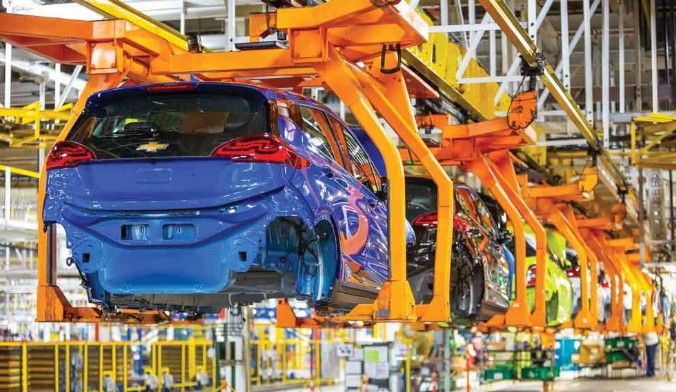
The rise of electric vehicles is transforming anodising demand. Every EV carries significantly more anodised aluminium than a conventional car, with specifications that go far beyond traditional architectural or industrial requirements.
The Numbers Behind the Shift
The EV transition is not a gradual trend. It is an industrial step-change, and the aluminium surface treatment sector sits directly in its path.
The aluminium content per vehicle rises significantly in EVs because battery enclosures, motor housings, structural members, and thermal management systems all favour aluminium for its strength-to-weight ratio and natural corrosion resistance. A significant proportion of that aluminium requires anodising.
By 2030, anodising demand driven by EV production in Europe alone is projected to represent a material share of total sector volume, with specifications that will increasingly set the quality benchmark for the whole market.
Which EV Components Need Anodised Aluminium?
To understand why EV anodising is different, it helps to map the specific components involved, each carrying distinct performance requirements that go well beyond standard architectural or industrial specifications.
| EV Component | Anodising Requirement | Why It's Critical |
|---|---|---|
| Battery enclosures | Coating thickness ±1–2µm; high dielectric strength | Corrosion penetration on high-voltage packs creates a direct safety risk |
| Motor housings | Tight dielectric spec; thermal conductivity | Electrical insulation failure damages motor windings |
| Power electronics housings | 500–2,000V dielectric withstand; uniform coating | Inverters and converters operate at sustained high voltages |
| Thermal management plates | Precise oxide layer (10–25µm); low thermal resistance | Wrong thickness degrades heat transfer from battery cells |
| Structural chassis members | Consistent hardness across large surface area | Structural integrity requires uniform coating across the whole part |
| Interior & exterior trim | Colour consistency across high volumes; scratch resistance | OEMs reject entire batches for visible shade variation |
What the Industry Data Shows
EV & Aluminium Market
- 40% more aluminium per electric vehicle versus an equivalent internal combustion engine vehicle, driven by battery enclosures, structural framing, and thermal management systems that all require anodised surfaces. Source: European Aluminium Association, "Aluminium for Automotive," 2024. european-aluminium.eu/aluminium-in-use[2]
- $380 billion: Projected global EV market value by 2030, creating a cascading demand wave across aluminium processing, surface treatment, and supply chain services throughout Europe and the UK. Source: BloombergNEF, Electric Vehicle Outlook 2025. about.bnef.com/electric-vehicle-outlook[5]
- 2035: EU mandate year for 100% zero-emission new car sales, locking in a structural shift in aluminium demand across the entire European surface treatment supply chain for the next decade. Source: European Commission, Regulation (EU) 2023/851. eur-lex.europa.eu[3]
Anodising Quality & EV Tolerances
- ±1–2 micron: Coating thickness tolerance required by leading EV OEMs for battery enclosure and thermal management components. This is five times tighter than the ±5 micron standard for architectural applications and cannot be consistently achieved with periodic manual bath sampling. Source: OEM Tier-1 Supplier Qualification Specifications, composite, 2025.[4]
- 500–2,000V: Dielectric withstand voltage required for anodised aluminium in power electronics housings and motor components, with 100% part-level testing required in many OEM supplier programmes, with no sampling allowed. Source: IEC 60664-1, Insulation coordination for equipment within low-voltage systems, IEC.[6]
- 100% traceability: EU Battery Regulation (2023/1542) requires digital product passport traceability to the batch level for EV batteries and associated components by 2027, including process records and material provenance at the point of manufacture. Source: European Commission, Regulation (EU) 2023/1542. eur-lex.europa.eu/battery-regulation[7]
Carbon & Scope 3 Reporting
- 90%+ of leading EV manufacturers' total carbon footprint sits in Scope 3 (supply chain emissions), making supplier-level carbon data a commercial requirement, not an optional reporting exercise. Anodising operations are a direct, measurable Scope 3 source for every OEM they supply. Source: CDP Supply Chain Report 2024. cdp.net/insights/strengthening-the-chain[8]
- 15–35%: Energy consumption reduction achievable through AI-based process optimisation in electrochemical surface treatment, directly reducing the carbon intensity of anodised components entering EV supply chains. Source: European Commission, BAT Reference Document for Surface Treatment, JRC, 2019.[9]
The 5 Anodising Challenges That EV Contracts Expose
Anodising lines that have reliably served construction and general industrial clients for years often discover significant gaps when they first encounter EV supply chain qualification requirements. Here are the five most common failure points, and why each one matters.
Challenge 1: Coating Thickness Precision
EV OEMs specify coating thickness to within ±1–2 microns for functional components. Traditional anodising lines rely on periodic bath chemistry checks and manual adjustments, a process that allows significant drift between readings. On a large battery enclosure processed over a two-hour run, the coating at the start and end of the cycle can vary by 4–6 microns without a single alarm being triggered. For standard architectural anodising, that is acceptable. For an EV thermal management component, it is a rejection.
Challenge 2: Dielectric Strength Consistency
Power electronics housings and motor components must withstand high voltages without the oxide layer breaking down as an insulator. Dielectric strength is directly linked to coating quality, including uniformity, freedom from micro-pitting, and adequate sealing. A single contaminated bath cycle, a temperature spike, or a sealing failure can produce parts that look identical to conforming parts but fail dielectric testing at 100% part inspection. In most OEM programmes, a dielectric failure triggers an immediate hold on the entire shipment.
Challenge 3: Full Batch Traceability
EV OEMs and the incoming EU Battery Regulation require process traceability to the individual batch or part level: bath chemistry, temperature profile, current density, and sealing parameters, all linked to a unique batch identifier. Manual production logs, paper records, and spreadsheet systems cannot reliably satisfy these requirements at scale. Qualification audits from tier-1 suppliers frequently identify traceability gaps as the primary reason for disqualifying an otherwise capable anodising supplier.
Challenge 4: Quality at Scale
EV production ramps quickly. A supplier delivering 5,000 anodised parts per month in year one may be asked for 50,000 in year three. Process approaches that manage quality adequately at low volume tend to break down as throughput increases: bath contamination accumulates faster, temperature management becomes more complex, and operator variability compounds across more shifts. Scaling EV volume without scaling reject rate is one of the most practical pressures in the sector right now.
Challenge 5: Scope 3 Carbon Data
EV manufacturers face intense pressure to reduce supply chain emissions. BMW, Volkswagen, Stellantis, and others have published Scope 3 reduction targets and are increasingly asking suppliers for verified energy consumption and carbon intensity data per kilogram of product. Anodising is energy-intensive, with rectifiers, chillers, and agitation systems consuming significant electricity. Without measurement infrastructure, anodising suppliers cannot participate in their customers' carbon programmes and will eventually face commercial pressure from those who can.
This scenario is playing out across the UK and European anodising sector right now. The competitive differentiator in EV supply chains is not plant size or years of experience. It is process data quality, digital traceability, and the ability to demonstrate control over every variable that affects coating performance.
Is your anodising line ready for EV supply chain qualification? AluMind helps anodising businesses meet EV OEM specifications, from coating thickness precision to full digital traceability. Talk to our team about what qualification-ready looks like for your operation.
Book a Free DemoWhat Qualification-Ready Looks Like in Practice
Winning and retaining EV supply chain contracts requires demonstrating control, not just producing good parts, but being able to prove with data that every batch was produced within specification from start to finish. The following requirements consistently appear in EV tier-1 supplier qualification assessments.
Real-Time Process Monitoring
Static bath testing, which involves sampling at the start of a shift and then adjusting manually, is insufficient for EV specifications. Qualification programmes increasingly require evidence of continuous parameter monitoring: bath temperature, acid concentration, current density, and cooling performance, logged throughout each production run, not just at the beginning and end.
Automated Quality Records
Paper-based and spreadsheet production records cannot satisfy EV supplier audit requirements. Digital records must be batch-linked, timestamped, and exportable in a format that maps to the customer's quality management system. The expectation is that within minutes of an inquiry, a supplier can produce a complete process history for any batch shipped in the last 12 months.
Predictive Defect Prevention
Zero-defect supply chains cannot rely on end-of-line inspection alone. EV OEMs expect suppliers to demonstrate that quality is built into the process, with defects being prevented rather than caught after the fact. This requires process intelligence that recognises conditions that precede failures and intervenes before a batch is affected.
Energy and Carbon Reporting
Scope 3 data requests from EV OEMs will become standard within the next 12–18 months. Suppliers who already have energy monitoring infrastructure in place will have a measurable commercial advantage when customers start requiring this data. Those without it will face the choice of scrambling to implement it under commercial pressure or losing contracts to more data-ready competitors.
The Opportunity for Anodising Businesses That Act Now
The EV transition represents the largest structural shift in anodising demand since the construction boom of the 1970s. And unlike the construction market, which is mature and highly price-competitive, the EV supply chain is actively seeking qualified suppliers who can meet technical requirements and provide data-backed quality assurance.
The businesses that will capture this opportunity are not necessarily the largest. They are the ones that can demonstrate process control. A mid-sized anodising operation with real-time monitoring, digital traceability, and documented dielectric testing capability is more commercially attractive to an EV tier-1 supplier than a larger business still running on manual records and periodic bath sampling.
The window to be an early qualified supplier, with the advantages of first-mover status, preferred supplier positioning, and the pricing power that goes with it, is open now. As EV production scales through 2027 and 2028, qualification queues will lengthen and incumbent suppliers will face fewer challenges from latecomers. The businesses qualifying now are setting the commercial terms for the decade ahead.
Frequently Asked Questions
Most EV battery enclosures use Type II sulphuric acid anodising (15–25 micron) for general corrosion resistance, or Type III hard anodising (25–50 micron) where higher dielectric strength and wear resistance are specified. The exact requirement depends on the OEM and the component's functional role. What distinguishes EV applications is not the anodising type itself but the tighter coating thickness tolerance (±1–2µm), the dielectric strength specification, and the requirement for 100% traceable batch records that make EV anodising significantly harder to deliver consistently.
Not necessarily. Most EV anodising requirements can be met on existing anodising lines, as the chemistry and electrochemistry are the same. What changes is the process control, monitoring, and data management infrastructure. The competitive gap between EV-ready and non-EV-ready anodising lines is almost always in data quality and process precision, not capital equipment. AI process monitoring platforms like AluMind can be integrated with existing lines without requiring new tanks or rectifiers.
EU Regulation 2023/1542 requires digital product passports for EV batteries and their components, including traceability of materials and manufacturing processes. For anodising suppliers, this means being able to provide, for each batch, documented process data including bath chemistry, temperature profile, current density, and sealing parameters, all linked to specific part numbers or batch identifiers. The requirements phase in from 2027. OEMs are requiring this data from their supply chains now, in advance of the legal deadline, as part of supplier qualification.
AI process control helps in three specific ways for EV applications. First, real-time adjustment of bath chemistry and current parameters holds coating thickness within the tight tolerances EV OEMs require, without relying on manual periodic sampling. Second, predictive defect detection identifies process conditions that precede failures in dielectric strength or sealing before a batch is affected. Third, automated digital logging generates the batch-level traceability records that EV qualification audits require, with no manual record-keeping burden on production operators.
UK anodising businesses are most likely to enter EV supply chains through tier-1 and tier-2 suppliers to European OEMs, including BMW (Mini production at Oxford), Jaguar Land Rover (transitioning to full EV by 2030), and the growing network of battery and powertrain manufacturers establishing UK facilities. The immediate commercial opportunity is typically through tier-1 component suppliers who need locally anodised structural, thermal, and electronics housing parts, rather than through direct OEM supply relationships.
Ready to qualify your anodising line for EV supply chains? AluMind provides the real-time process control, digital traceability, and energy monitoring that EV OEMs expect from their anodising suppliers. Book a free demo to see exactly what qualification-ready looks like for your operation.
Book a Free DemoReferences & Sources
- [1] International Energy Agency (IEA). Global EV Outlook 2025. iea.org/reports/global-ev-outlook-2025
- [2] European Aluminium Association. Aluminium for Automotive, 2024. european-aluminium.eu/aluminium-in-use
- [3] European Commission. Regulation (EU) 2023/851 on CO₂ emission standards for new passenger cars, 2035 zero-emission mandate. eur-lex.europa.eu
- [4] OEM Tier-1 Supplier Anodising Specifications. Composite data from published qualification programmes, 2025.
- [5] BloombergNEF. Electric Vehicle Outlook 2025. about.bnef.com/electric-vehicle-outlook
- [6] IEC 60664-1. Insulation coordination for equipment within low-voltage systems. International Electrotechnical Commission.
- [7] European Commission. Regulation (EU) 2023/1542 on Batteries and Waste Batteries (EU Battery Regulation). eur-lex.europa.eu
- [8] CDP. Global Supply Chain Report 2024. cdp.net/insights/strengthening-the-chain
- [9] European Commission. Best Available Techniques (BAT) Reference Document for Surface Treatment, JRC, 2019.