One Retirement Party Away From Losing 30 Years of Process Knowledge
Every anodising line has one. The operator who can tell the bath is drifting from the colour of the fume, who knows a rack is about to burn before the ammeter confirms it, who has never once needed to look up the temperature window because it lives in their hands. That knowledge was never written into a manual. It was earned, one shift at a time, over 20 or 30 years.
Across the UK and Europe, that generation is retiring, and the pipeline replacing them is thinner than at any point in living memory. This isn't a distant workforce planning problem for HR to file away. For a process as sensitive to human judgement as anodising, it is a direct, quantifiable threat to quality, throughput, and continuity of supply.
This post looks at what the UK and European workforce data actually shows, why anodising is more exposed to it than most manufacturing processes, and what's being done, including with AI, to capture that expertise before it walks out the door for good.
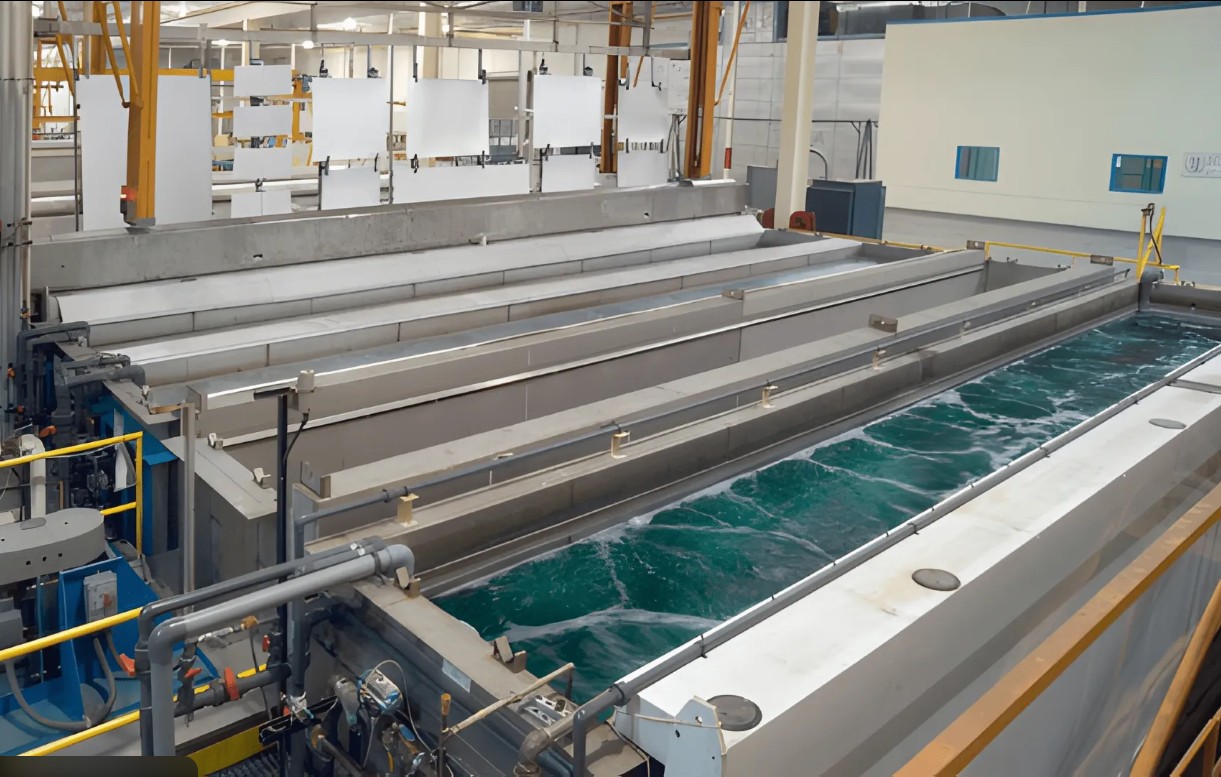
Anodising lines like this one depend on operator judgement that instruments alone don't capture, the kind built up over decades, not weeks.
What the Workforce Data Actually Shows
The scale of the problem is not anecdotal. It is documented, quarter after quarter, by the UK's own manufacturing bodies and by pan-European labour statistics.
The Detail Behind the Headlines
UK Workforce & Demographics
- 47 years: The average age of a UK manufacturing worker today, with 21% of the workforce already aged 55 or over. Source: UK manufacturing sector workforce analysis, 2026.[2]
- 36%: Proportion of the UK manufacturing workforce over the age of 50, compounding retirement pressure across the next decade. Source: Engineering skills gap analysis, 2026.[5]
- 76%: Of UK manufacturers report active recruitment difficulty in 2026, with automotive and aerospace vacancy rates running 40% above the sector average. Source: UK manufacturing recruitment data, 2026.[6]
Apprenticeship & Training Pipeline
- 23% decline: Fall in UK manufacturing apprenticeship completions between 2019 and 2025, just as demand for new entrants accelerates. Source: UK apprenticeship completion data.[6]
- 145:1: Ratio of open engineering job vacancies to available apprenticeship places in the UK, with a gap of roughly 46,000 unfilled engineering positions. Source: UK engineering skills shortfall study.[5]
- 1 million: Additional engineers the UK is estimated to need by 2030 to offset retirements and meet demand, with 20% of current engineers expected to retire within five years. Source: UK engineering workforce projection.[5]
European Manufacturing Workforce
- 4.7 million: Workers Germany's Federal Employment Agency estimates will exit employment through retirement between 2024 and 2028 alone. Source: German Federal Employment Agency, cited in European workforce analysis.[3]
- −4% to −8%: Projected shrinkage of Europe's working-age population by the end of the decade, with Germany's decline running closer to 8%. Source: European labour market projections.[3]
- 20–40%: Estimated share of operating knowledge lost per skilled role that exits a business when knowledge transfer isn't actively managed. Source: European manufacturing workforce crisis analysis.[3]
Economic Impact
- £7.1 billion/year: Estimated cost of the UK engineering skills shortfall in lost productivity and delayed projects. Source: UK engineering skills gap economic analysis.[4]
- 68%: Of Make UK member manufacturers expect recruitment difficulty to worsen over the next 12 months, with order books already stretching into 2026 and beyond faster than skilled capacity can grow. Source: Make UK quarterly manufacturing outlook.[1]
Why Anodising Is More Exposed Than Most Manufacturing Processes
Every manufacturing sector is feeling this squeeze, but anodising has a structural vulnerability that makes it worse: the skill involved is disproportionately tacit, not documented.
The Knowledge That Never Made It Into a Procedure
A standard operating procedure can specify a bath temperature range, an acid concentration, a cycle time. What it cannot easily capture is the experienced operator's sense that today's bath "feels" a fraction off, that a particular rack geometry needs a slightly different current ramp, or that a batch of a certain alloy is running warmer than the thermocouple suggests because of where it sits in the tank. This is exactly the kind of sensory, pattern-based judgement that takes years to build and cannot be handed over in a two-week handover period.
A Small, Specialised Talent Pool
Unlike CNC machining or general assembly, anodising draws from a narrow specialist pool. There is no mass apprenticeship pipeline feeding electrochemical surface treatment the way there is for welding or CNC programming, which means the 145:1 vacancy-to-apprenticeship ratio affecting UK engineering as a whole is, in practice, even less forgiving for anodising specifically.
Long Ramp-Up, High Consequence of Error
Getting a new operator to full competency on an anodising line traditionally takes 3 to 5 years of hands-on experience across enough seasonal and batch variation to build real judgement. Unlike many manufacturing errors, an anodising mistake is often invisible until a part fails in the field, which means a less experienced operator's errors can go undetected for weeks, well beyond the point where they're cheap to fix.
Capturing the Knowledge Before It Leaves
This is the problem AluMind's physics-informed AI approach was built to address directly. Rather than treating process control as a black box, the system encodes the electrochemical relationships an experienced operator has learned by feel (how voltage, temperature, and cycle time interact with alloy composition to affect coating quality) into structured, explainable models that don't retire, don't take annual leave, and don't need six weeks' notice to hand over what they know.
In practice, this means new operators get real-time, explained recommendations ("17.5V chosen for improved quality with minimal energy penalty") instead of having to build that judgement purely through years of trial and error. It doesn't remove the need for skilled people; it shortens the distance between a new hire and a productive one, and it means the loss of any single person is no longer a single point of failure for the whole line.
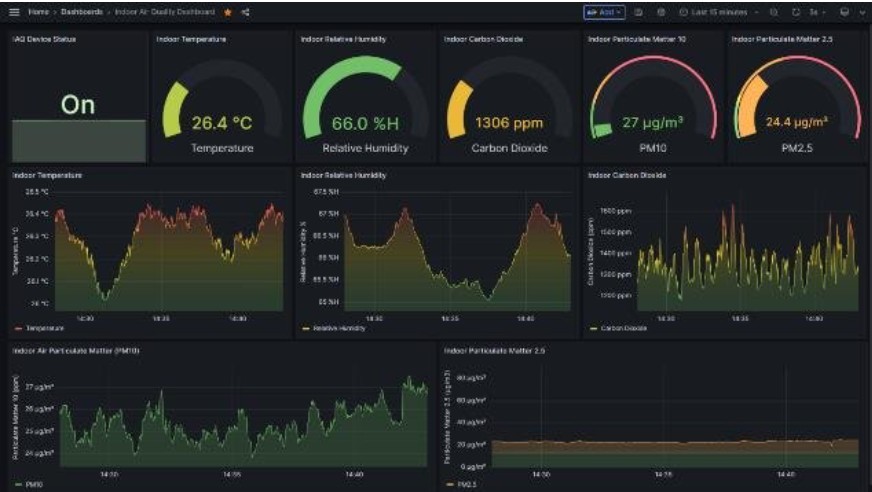
Real-time process monitoring turns tacit, memory-based judgement into visible, shareable data, the first step to making expertise transferable.
Traditional vs. AI-Assisted Onboarding: A Worked Comparison
The table below illustrates the practical difference in ramp-up exposure between a traditionally trained operator and one supported by real-time AI recommendations, based on typical Type II anodising lines.
| Stage | Traditional Path | AI-Assisted Path |
|---|---|---|
| Basic competency (safe, supervised operation) | 3–6 months | 3–6 months |
| Independent shift coverage | 12–18 months | 6–10 weeks |
| Full judgement-level competency (bath drift, early defect detection) | 3–5 years | Ongoing: AI recommendations narrow the gap from day one |
| Risk exposure during ramp-up | High: errors often invisible until field failure | Reduced: parameters validated against safety and quality constraints before execution |
| Single point of failure if operator leaves | High | Substantially reduced |
These ranges reflect typical industry onboarding timelines and AluMind's design targets validated in simulation; they are not yet a large-sample production benchmark.
Frequently Asked Questions
Basic, supervised competency usually takes 3 to 6 months. Full judgement-level competency (the ability to sense bath drift, anticipate defects, and adjust for edge cases without guidance) typically takes 3 to 5 years of hands-on experience across enough seasonal and batch variation to build real pattern recognition.
Tacit knowledge is know-how that experienced workers hold but rarely write down: judgement built from years of pattern recognition rather than documented procedure. Anodising is especially reliant on it because bath chemistry, temperature, and current distribution all drift continuously, and experienced operators often catch problems by sensory cues (colour, smell, current behaviour) before instruments confirm them.
Not entirely, and that's not the realistic goal. AI process control can capture and structure a large share of the pattern-based judgement that currently lives only in one or two people's heads, which shortens onboarding and reduces the risk of any single departure disrupting quality. Experienced operators remain essential for edge cases, continuous improvement, and situations the model hasn't seen before.
More exposed than manufacturing generally. Anodising draws from a narrow, specialist talent pool with no mass apprenticeship pipeline comparable to welding or CNC machining, while UK-wide data already shows 186,000 unfilled manufacturing vacancies, a 23% decline in apprenticeship completions since 2019, and roughly a third of the current workforce reaching retirement age by 2030.
Worried about what happens when your most experienced operator retires? Talk to the AluMind team about how AI-assisted process control can shorten onboarding and protect your line against single points of failure.
Book a Free DemoReferences & Sources
- [1] Make UK: Quarterly Manufacturing Outlook, 2026, and related UK manufacturing vacancy reporting.
- [2] UK manufacturing sector workforce demographic analysis, 2026: average workforce age and over-55 workforce share.
- [3] European manufacturing workforce crisis analysis, 2026, including German Federal Employment Agency retirement projections and EU working-age population forecasts. teamazing.com/manufacturing-workforce-crisis-europe
- [4] UK engineering skills gap economic impact analysis, 2026. advancedresourcing.co.uk/engineering-skills-gap-2026
- [5] UK engineering skills shortfall and apprenticeship pipeline study, 2026. engineerlive.com/uk-technical-workforce-shortfall
- [6] UK manufacturing recruitment and apprenticeship completion data, 2026. aspion.co.uk/uk-manufacturing-skills-shortage