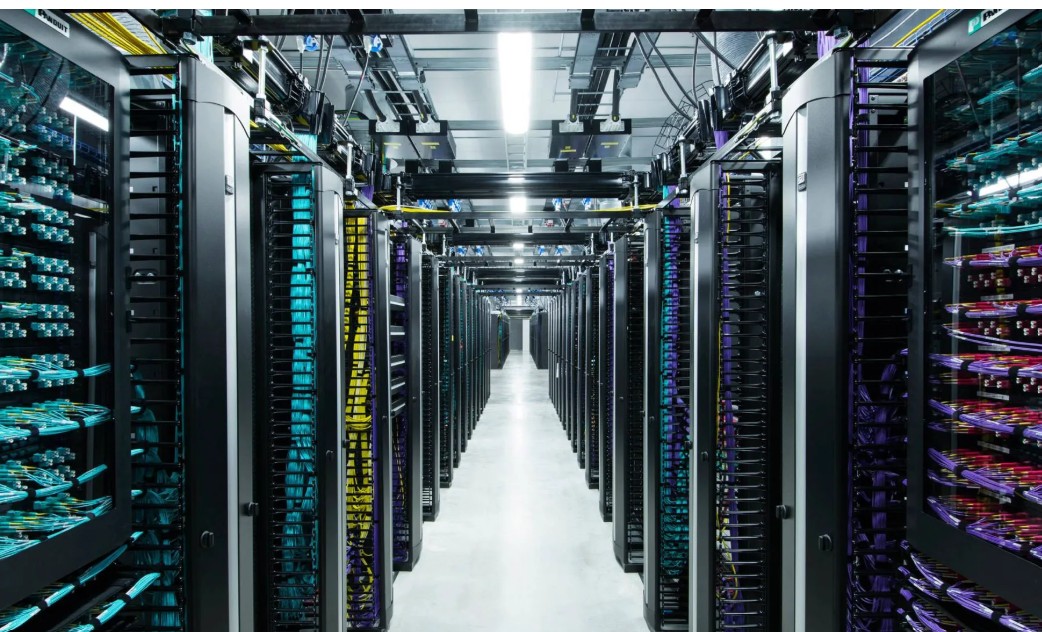
Two things happened to UK aluminium policy this year that, on their own, would each be a modest headline. Together, they change the calculus for anyone running an anodising line. First, aluminium was added to the UK's Critical Minerals and Growth Minerals lists, formally recognising it as a strategic enabler of industrial competitiveness and economic resilience. Second, more than 90 new data centers are planned in the UK by 2030, with government estimates putting the required AI-capable capacity at up to 6GW. Layer on top of that the Aluminium Federation's (ALFED) new push for UK reindustrialisation, and you get a rare alignment: a government actively naming your raw material strategic, at the exact moment a new, high-spec customer sector is scaling up demand for it. For anodisers, this is not background noise. It's a market signal worth acting on.
What Actually Changed
ALFED's Trade Committee has put "UK aluminium reindustrialisation" formally on the agenda, publishing a briefing that maps the UK's position within a globally connected aluminium ecosystem, covering primary metal, scrap, semi-finished products, and finished goods moving across borders. The Federation's most recent economic modelling, produced with the Fraser of Allander Institute, puts the wider UK aluminium industry's footprint at £9.4 billion in GVA and 108,000 FTE jobs, with the production sector alone contributing £1.9 billion in GVA and 16,500 jobs. That is the evidence base behind the sector's push for the government to treat aluminium with the same strategic seriousness as steel.
The Critical Minerals and Growth Minerals designations matter because they change what kind of support and investment aluminium can now attract, including recycling and processing infrastructure, supply chain resilience funding, and a stronger negotiating position in trade policy. None of that money lands directly in an anodiser's bank account. But it does signal where government attention, and increasingly capital, is heading.
Why Data Centers Need Anodised Aluminium Specifically
The data center build-out isn't just a demand number. It's a demand for a very specific set of material properties that anodised aluminium happens to deliver well:
- Corrosion-resistant enclosures and racking: server cabinets, cable trays, and structural framing need a finish that won't degrade over a 15–20 year facility lifespan.
- Thermal management: anodised aluminium heat sinks and cold-plate housings benefit from anodising's electrical insulation properties alongside aluminium's natural thermal conductivity.
- EMI shielding and electrical enclosures: consistent coating thickness and dielectric strength are non-negotiable in equipment housing sensitive electronics.
- Façades and building envelopes: hyperscale campuses are increasingly specified with architectural anodised finishes for durability and planning approval, not just aesthetics.
- Fire and safety compliance: Type II and Type III hard anodising are specified where combustibility and durability standards are strict.
This is a different buyer profile from aerospace or EV work, but it demands the same thing every high-spec buyer demands: tight tolerances, batch-to-batch consistency, and documentation you can hand to an auditor without a scramble.
The Supply Squeeze Behind the Opportunity
None of this is arriving into a slack market. Base metal prices, including aluminium, rose by roughly a third between January 2025 and April 2026, and government-backed research has already flagged that vulnerabilities in raw material supply chains need addressing to secure the metal the UK's digital infrastructure build-out requires. Data centers, EV manufacturing, and construction are now competing for the same constrained aluminium supply at the same time.
Three Things Anodisers Should Do Now
1. Get In Front of Data Center Contractors and Fabricators Early
Data center construction runs through main contractors and specialist fabricators who source components years ahead of a facility going live. If your line isn't already known to the fabricators supplying racking, enclosures, and façade systems for this sector, this is the moment to change that, before the specification lists lock in.
2. Treat Consistency and Traceability as the Differentiator
Data center buyers, like aerospace and EV buyers before them, will increasingly ask for verified process data, including batch traceability, coating thickness records, and material provenance, not just a certificate of conformance. If you've already built this discipline for CBAM or Digital Product Passport readiness, you're ahead. If not, this new demand is another reason to close that gap now, not when a tender requires it.
3. Model the Margin Impact of Tighter Aluminium Supply
Rising base metal prices change your cost base regardless of which sector you serve. Anodisers who can quantify and defend their process efficiency, from energy per batch to scrap/rework rate to first-pass yield, will be far better placed to hold margin on data center contracts than those pricing on habit.
The Bottom Line
Government policy doesn't often hand an entire industry a tailwind this directly. Aluminium's new Critical Minerals and Growth Minerals status, ALFED's reindustrialisation push, and a genuinely new high-spec buyer sector are converging in the same twelve months. The anodisers who move now, building relationships with data center fabricators, tightening their consistency and traceability, and protecting margin against a rising cost base, will be the ones sitting inside the specification lists when the next wave of facilities breaks ground. The ones who wait will be reading about it in next year's ALFED white paper instead.
Sources
- ALFED — Aluminium to be Recognised as Both a Critical and Growth Mineral in Forthcoming UK Strategy
- Sustainable Packaging News — ALFED Trade Committee puts UK aluminium reindustrialisation firmly on the agenda
- Fraser of Allander Institute — The Aluminium Industry in the UK (with ALFED, September 2024)
- British Geological Survey — Demand for data centers presents challenges and opportunities for UK critical mineral supply chains
- DataCenterDynamics — New UK compute roadmap says country needs 6GW of AI-capable data center capacity by 2030
- Zetwerk — Aluminium Enclosure Design and Manufacturing for Industry
- Huaxiao-alloy — Aluminum Alloys for Data Center Infrastructure
- Electronic Design — EMI Shielding with Thermal Management
- Proteus Facades — 5 things architects should know about anodised aluminium cladding
- Lorin — Architectural Applications: Facades and Cladding
How AluMind Can Help?
AluMind's AI platform gives your anodising line the consistency, traceability, and efficiency data that high-spec buyers, whether data center, aerospace, or EV, now expect as standard:
- Real-time process control for tighter, more consistent tolerances
- Batch-level traceability ready for tender and audit requests
- Energy and yield analytics to protect margin as input costs rise
- Predictive quality control to reduce rework and win repeat business
Be ready when the next tender lands. Contact AluMind to see how AI-powered process control positions your line for the UK's next wave of high-spec demand.